Field trip with Matt Kay
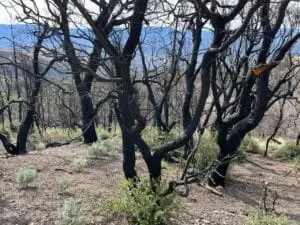
On this hike to the summit area of Figueroa Mountain, biologist Matt Kay will focus on the themes of recovery and resiliency in the plant life of this ecological sky island. Much of the mountain was burned during the Lake Fire of July 2024. Now, nearly two years after this wildfire, the Figueroa landscape is undergoing a transformation that provides a living classroom for the study of fire ecology. The trip will explore the intersection of natural history and resource management. Of particular importance is how natural history informs management of native plant communities under various fire regimes, and how understanding natural history of plants and animals shapes our expectations for recovery post-fire
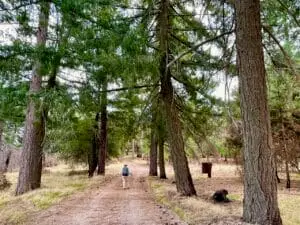
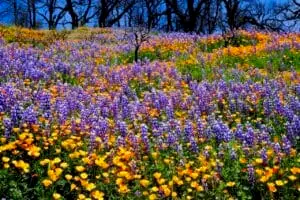
Figueroa Mountain is one of the few places in our region that offers easy access to stands of Ponderosa pine, big-cone Douglas-fir, and canyon oak – three tree species that each respond to fire in different ways. The mountain is also home to a variety of shrubs and other perennials that have their own adaptations to fire. On this hike we’ll have an opportunity to look at vegetation transects that were established by the U.S. Forest Service after the fire, and we’ll also see unburned areas for comparison. With less competition and shade, many annuals vigorously rebounded following the Lake Fire last spring, and with any luck, participants will see some good displays of wildflowers this year.
This moderately strenuous hike entails five miles of walking and an elevation gain over 800 feet. Registrants need to be in good condition for hiking and are expected to carry ample water for personal hydration as well as a lunch to eat at the summit. Trekking poles are recommended.
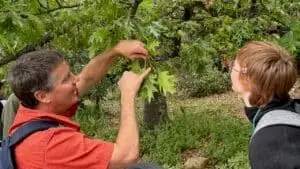
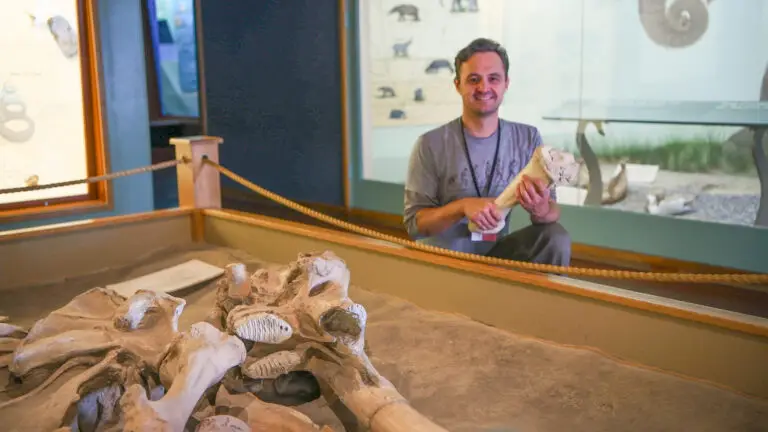
Matt Kay grew up in Santa Barbara where he fell in love with the natural world, from chaparral-covered foothills and backcountry creeks to coastal beaches and nearshore reefs. This passion for natural history led him to obtain a BS in biology from the University of Oregon and a PhD in fisheries and marine science from UC Santa Barbara. Matt is a Professor of Biology at Santa Barbara City College, where his courses emphasize evolution by natural selection and the adaptations that organisms possess to survive and reproduce under the selective pressures they face in the environment.
How to Register
Event Date: Saturday, April 18, 2026, 9 a.m. to 3:00 p.m.
Participation is limited to 20.
Registration opens at 9:00 am on March 18 for members and March 28 for nonmembers at syvnhs@syvnature.org or 805/693-5683
Field trip location and information will be sent to registrants.
Hike difficulty is rated as moderately strenuous
Members $15 / Nonmembers $30 / Children $5
Featured image by John Evarts.