Free live lecture and Zoom webinar with Lara Brenner
Co-Sponsored by the Solvang Library

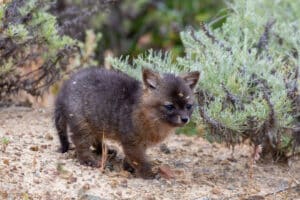
Our Channel Islands are often called America’s Galapagos due to the large number of animal and plant species found there and nowhere else in the world. Protecting the islands’ unique biota from current threats and rehabilitating their unique ecosystems from damaging historic uses is an ongoing challenge that calls for scientific studies and creative solutions. The Nature Conservancy (TNC), which owns three quarters of Santa Cruz Island, the largest of the five National Park islands, has taken on that challenge. Historic overgrazing and overharvesting altered or devastated portions of the island’s native ecosystems; imported pigs caused extensive changes in populations of endemic species like the island fox and island spotted skunk populations; and nonnative plants and insects continue to arrive as part of human visitation and displace native species. While Santa Cruz Island has benefitted from the protections provided by TNC and the National Park, the island is now on a new trajectory due to the effects of climate change.
How can such unique islands be protected and rehabilitated? Island ecologist Lara Brenner has been addressing such problems on the Channel Islands for 8 years, first on Catalina Island and then for TNC on Santa Cruz Island, conducting or overseeing a variety of in-depth wildlife studies. In this presentation, she will share some of her research and ongoing challenges with us. She has been given the comprehensive task of developing procedures to prevent the arrival of invasive species; refining technology for the early detection of unwanted arrivals; and developing conservation protocols which can also be used on other Channel Islands and even other islands of the Pacific. Santa Cruz Island is both a laboratory and potentially a model of effective island conservation.
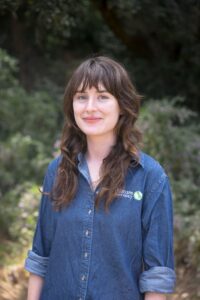
Lara Brenner received her B.A. in environmental studies from Carleton College in Minnesota and an M.S. in wildlife biology from the University of Montana with a thesis on human-cougar conflict. Among other projects, she has published a natural history field guide to oyster-associated species of New York Harbor. She is an Island Scientist for TNC California’s Land Program.
How to Attend
Event date: Wednesday, March 11, 2026, 7:00 to 9:00 p.m.
Live lecture location: Solvang Library: The courtroom adjacent, 1745 Mission Drive (CA Hwy 246)
Zoom: Register for the webinar here: Protecting Santa Cruz Island
A question-and-answer period follows the lecture.
The presentation recording will be posted online after the event.